
Worker placement is about using a limited number of tokens, often little people-shaped pieces better know as Meeples, to claim actions before others do. Once a space is taken, it’s blocked for the round, which makes timing and planning matter more than luck. To be fair, it can feel tight or frustrating when someone grabs the spot you needed, but that tension is what makes the whole thing click.
Some examples of worker placement are Atlantis Exodus, Tea Garden and Inori.


Prague Unseen – There’s Always Something Else to Do
Old Prague has seen better days. A great flood has damaged the city, its neighbourhoods need rebuilding, and apparently ordinary construction workers aren’t going to be enough. Hidden among the streets are four rather unusual groups: the Horned, Vodniks, Golems…
Keep reading
Wild World – Every Creature Has a Job
A vast land is divided into five realms: fire, ice, magic, forest and water. We arrive with a small clan of workers and start sending them around the board to gather resources, recruit creatures and take on monsters. Those creatures…
Keep reading
ASHES: Blackout Protocol – There’s Still More We Wanted to Do
It’s 1989, and things have gone rather badly. Decades of political conflict have ended in the Great Nuclear War, most of humanity now lives underground, and the surface isn’t exactly somewhere you’d go for a relaxing weekend. The surviving colonies…
Keep reading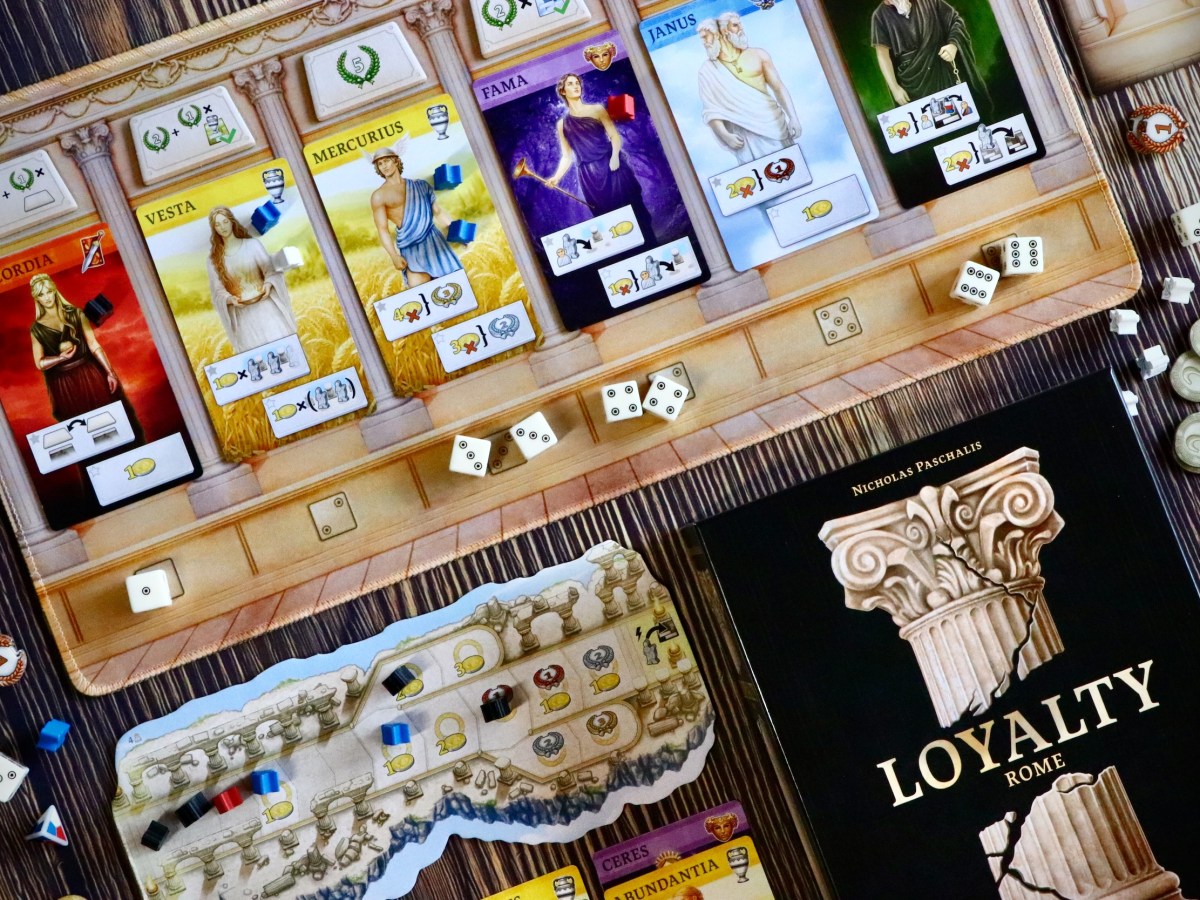
Loyalty: Rome – Where Did All My Messengers Go?
Keeping the gods happy was rather important in ancient Rome. In Loyalty: Rome, you’re one of several senators trying to maintain the Pax Deorum, the peace between Rome and its gods. Of course, you’re also trying to become more prestigious…
Keep reading
Opera Magna – Maybe We Should Build the Cathedral
Building a cathedral is complicated. You need marble, wood, metal, glass, skilled workers and, apparently, a very good supply chain. Opera Magna takes us to Renaissance Florence, where each player runs a workshop helping with the construction of the Cathedral…
Keep reading
Níjar – Making Pots Is the Easy Part
Níjar takes us to southern Spain in the 1920s, to the small Andalusian town that gives the game its name. Long before tourism became important to the region, Níjar was known for crafts such as pottery, esparto and jarapas, the…
Keep reading
Countryside – Four Workers and Too Many Farm Plans
A small patch of land slowly turns into a proper countryside. A field appears, then a garden, perhaps a barn, and before long there are fruit trees, animals, crops, and people all trying to be useful at the same time.…
Keep reading
Wondrous Creatures: Winterfall – A Season of Change
The island of Starbeak was first discovered when explorers followed a strange bird with a glowing beak through the sea mist. On the other side, they found a mysterious island full of unusual creatures, hidden habitats, and enough weird wildlife…
Keep reading
Luthier – Building More Than Instruments
When I first saw Luthier on the table, it was difficult to know where to look first. Instruments, patrons, performers, workshops, an orchestra running across the centre of the board… there is a lot going on. Underneath all of that,…
Keep reading
Wine & Cheese – Balancing Production in Burgundy
In Wine & Cheese, two farmsteads in Burgundy are trying to make the best wine and cheese over two years. The setting sounds calm: vineyards, pastures, cellars, little workers moving through the seasons. You could almost imagine a peaceful afternoon…
Keep readingSomething went wrong. Please refresh the page and/or try again.
Subscribe to receive updates!